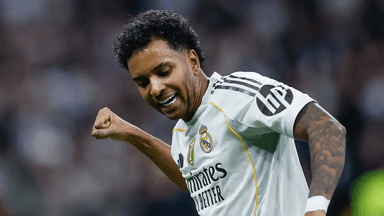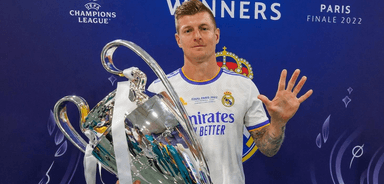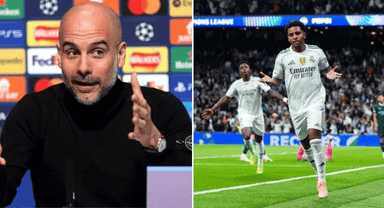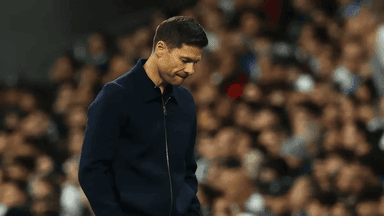

In the just-concluded Champions League match of this round, Real Madrid lost 1-2 to Manchester City at home after being reversed.
The latest news is that some Real Madrid players are dissatisfied with flying to Spain a day early for away games. They would prefer to arrive on the day of the match. Real Madrid has a lot of away games recently—five La Liga matches and two Champions League matches.
But this is a club-level arrangement by Real Madrid to allow the Santiago Bernabéu Stadium to host the NFL game between the Miami Dolphins and the Washington Commanders on November 16th. The renovated stadium is multi-purpose, but changing its use takes time.
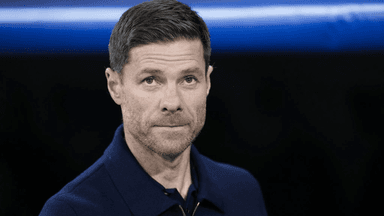
Alonso may be one of the few coaches with the status required to manage modern Real Madrid—both in terms of his playing career and coaching experience. However, taming this modern Real Madrid is an entirely different matter.
Insiders at Bayer Leverkusen revealed that the players hold Alonso in high awe. Florian Wirtz has grown into one of the brightest players in the Bundesliga under Alonso's guidance, and he often stays behind to train with the coach after regular training sessions.
The same goes for Spanish international Alex Grimaldo, whose career truly flourished relatively late under Alonso's coaching.
At Real Madrid, the atmosphere is completely different. In various late-night radio programs, players' complaints about Alonso's practice of talking to them at the training ground every morning have also sparked controversy. Some of them are said to find this schedule a bit cumbersome.
This sounds like a group of ultra-wealthy footballers complaining, seemingly unaware of how lucky they are. Of course, this is not the whole story, and the situation remains unclear. Those who prefer the eras of Ancelotti and Zidane will point out that the team has won 6 Champions League trophies in the past 13 seasons and 3 La Liga titles in the last 6 seasons.
But if you hire a meticulous young coach like Alonso, don't be surprised if his coaching style is also meticulous.
Ultimately, the decision always lies with the president. The 78-year-old Florentino Pérez has led the club for 23 of the past 25 years. A brutal succession battle is brewing, waiting for the day he steps down, but in the meantime, Pérez is also extremely busy.
He is trying to do what none of his successors have done—privatize this membership-based club to restructure its capital. Even a trial sale of 5% of the shares is extremely complex, involving numerous tax issues. Completing a full or partial sale may require new legislation.
Over the years, Real Madrid's star players have often been above the coach. This was particularly evident between Bosque's departure in June 2003 and Mourinho's appointment in 2010, when Real Madrid changed 9 head coaches in 7 years.
Ancelotti's last four years at Real Madrid were the longest tenure of a head coach since Muñoz's 16-year reign ended in 1974. It is well known that during Ancelotti's two stints at Real Madrid, he did not attempt to rebuild the club in any specific way. He usually managed the team relatively loosely.
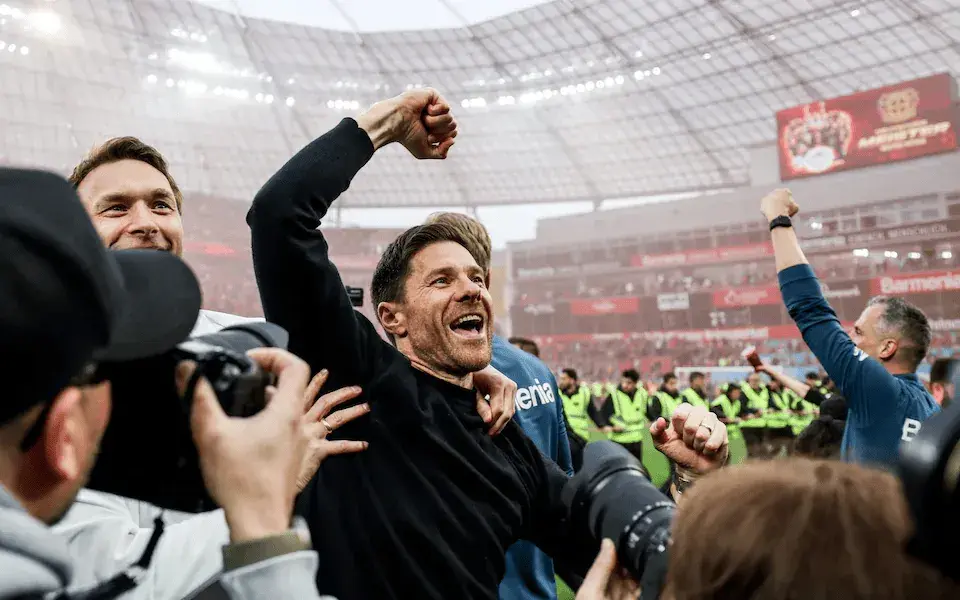
But for Alonso's generation of coaches, the situation is completely different. At Leverkusen, where he ended Bayern Munich's 11-year consecutive championship streak, the hierarchy is very clear:
The sports director holds supreme power, while the coach is responsible for training and organizing a team mainly composed of players introduced under the leadership of the senior management. All elements such as tactics, fitness, sports science, and data are applied to the team, and every player must accept these requirements. Some players have higher status than others, but no one dares to deviate from the established system.
At Real Madrid, the ultimate power lies with Pérez, whose long-term control over the club's members has essentially made the club his one-man show. This power has also flowed from him to the big names in the locker room, who have also witnessed how their predecessors abused this power.
Is Real Madrid ready to embrace a young, progressive coach like Alonso who is eager to make major changes? Real Madrid usually does not appoint young coaches. Except for Valdano in the 1990s and later Zidane (both promoted internally), one would have to go back a long way to find a younger coach.
Benito Floro, who took office in 1992 at the age of 40, is not one of the most acclaimed coaches in the club's history.
Alonso's coaching style is self-developed—following the rigorous norms of modern football and having similarities with his peer coaches. This style has obviously been effective in Germany. The question is whether it will be effective in the environment of Real Madrid, where not everyone likes it.